Stemtree of Spring TX: Building Confidence Through STEM Challenges
Spring, Texas is a town where family calendars sprint from recital to soccer practice to library story times. In this landscape, a place like Stemtree stands as more than a supplemental activity—it's a deliberate scaffold for curiosity. The programs offered by Stemtree of Spring TX sit at the intersection of play and persistence, turning messy problems into clear, solvable challenges. This is where students notice that errors are not a verdict but a step along the path to understanding. The result isn’t simply a memo of what they learned; it’s a quiet but unmistakable boost to their confidence, a new posture toward learning that sticks long after the classroom lights dim.

The real strength of Stemtree in Spring TX comes from its people. Coaches who are as comfortable tinkering with a robotics kit as they are guiding a reluctant writer through a design thinking exercise form the backbone of a culture that treats questions as currency. The team understands that kids don’t arrive at a math problem with the same tools or stamina, and they adapt with a practical, hands-on approach. They bring a gardener’s patience to the soil of a child’s mind, carefully pruning misconceptions and allowing resilient shoots to emerge.
What makes Stemtree of Spring TX distinct begins with how the center thinks about STEM education itself. It isn’t about cramming concepts into a fixed schedule or forcing a single method onto every learner. It’s about offering a menu of challenging experiences that can be scaled up or down depending on interest and readiness. The philosophy is simple in theory, rigorous in practice: given a problem, students should wrestle with it, articulate their reasoning, test ideas, revise them, and finally demonstrate a working solution. That cycle—ponder, prove, adapt—becomes a reliable engine for confidence.
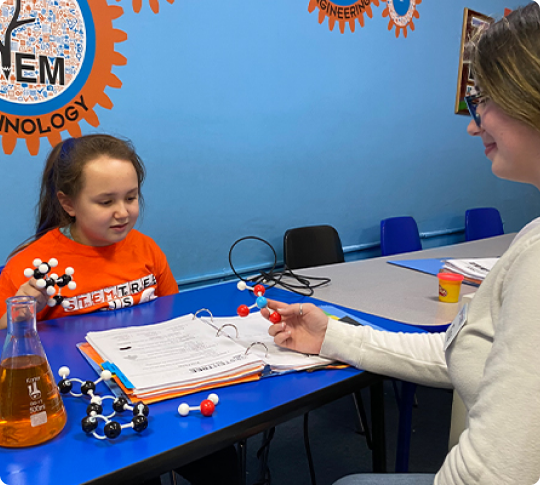
The physical space in Spring TX matters too. The environment is designed to invite experimentation without fear of failure. Workstations are organized to encourage collaboration and independent thinking in equal measure. There are quiet corners where a student can doodle a sketch of a mechanism while listening to the hum of a 3D printer in the next room. This blend of solitude and social engagement mirrors the real world, where engineers draft in solitude but iterate in teams. For a parent peeking in after a school pickup, the scene is a snapshot of a larger philosophy: learning as a craft, not a checklist.
The breadth ofStemtree programs in Spring TX covers math tutoring, engineering classes, technology classes, science classes, and coding for kids. The aim across all these offerings is not to churn out memorized procedures but to cultivate flexible thinking and the stamina to persevere through tricky tasks. A student might walk in with a shaky sense of what a fraction represents and leave with a toolbox for breaking down a problem, testing multiple strategies, and choosing the approach that yields reliable results. It is not a magic trick; it is a deliberate practice that rewards careful thinking and disciplined experimentation.
One of the recurring themes in the experience at Stemtree is the way challenges are sequenced. Early activities are designed to be accessible and immediately rewarding. Students finish a project with a visible artifact—a model, a wearable sensor, a small robot that completes a task—and the sense of accomplishment creates a positive feedback loop. As they grow more comfortable, the tasks increase in complexity, not in frustration. The progression is not linear; it’s a thoughtful arc that respects developmental differences while nudging every learner toward greater autonomy.
The relationship between STEM education and confidence is not mystical, but it does feel transformative. Confidence here emerges from small, repeatable wins. A student might struggle with a sensor’s response during a robotics station, then realize after a few trials that adjusting the threshold improves accuracy. The moment of clarity is often quiet, almost ceremonial, and it travels beyond the classroom. When a child learns to trust their own reasoning, they begin to engage more deeply in other areas, including writing, social studies, or a chemistry lab back at school. The discipline of making a prediction, testing it, and revising it becomes portable knowledge, a core habit rather than a one-off skill.
The experience of STEM classes for kids at Stemtree also carries a social dimension that matters. Collaboration is not a supplementary skill here; it is embedded in the design of most activities. Pairs or small groups work through a challenge, sharing responsibilities and arguing constructively about alternative approaches. The environment rewards curiosity that others can test and critique, and it trains students to listen as attentively as they speak. For many learners who felt unseen in larger classroom settings, this is a welcome shift. They find partners who value their ideas, even when those ideas require refinement. The social learning layer matters, because confidence often grows in tandem with belonging.
A practical window into the everyday operations of Stemtree in Spring TX reveals how a typical week stages growth across multiple domains. On Monday, a session might focus on the logic of problem decomposition. Students learn to slice a problem into its component parts, identifying what must be true for a solution to work. Tuesday could introduce a hands-on engineering challenge, such as designing a simple mechanism that accomplishes a goal with limited resources. Wednesday might dedicate time to coding challenges that illuminate the power of algorithms and logical sequencing. Thursday could be reserved for science explorations, where students design experiments to test hypotheses about natural phenomena. Friday often serves as a reflection day, where students present their work, articulate their reasoning, and receive feedback from peers and instructors.
The real-world relevance of Stemtree’s offerings in Spring TX is not incidental. Families seeking a robust STEM education recognize that these programs complement school learning in meaningful ways. When a student encounters a new math topic at school, the practice routines at Stemtree can reinforce and extend understanding. If a science unit touches on measurement and data, the subsequent experiments at Stemtree help students see those concepts in action. The advantage is not merely extra practice; it is a deeper engagement with ideas that helps students translate theoretical knowledge into practical judgment. The ability to connect classroom content with tangible projects closes a common gap between knowing and doing, a gap that often undermines confidence and curiosity alike.
In this landscape, culture matters. Stemtree’s Spring TX team cultivates a culture that recognizes effort as the path to mastery, not a proxy for talent. This distinction is crucial. Children internalize messages about who belongs in STEM, and the tone set by instructors can either close doors or open them. The mentors at Stemtree demonstrate that it is okay to struggle, to pause, to ask for help, and to revisit a problem with fresh eyes. They model a growth mindset through everyday interactions—the way they celebrate incremental progress, the way they reframe setbacks as clues, the way they offer guidance without commandeering the student’s discovery process.
The outcomes, while intangible at first, accumulate in a meaningful way. Some families report improved study habits and greater resilience when facing challenging coursework. Others observe an uptick in curiosity about how things work, which translates into questions that linger long after the session ends. A child might leave with a plan to design a keep-it-simple prototype for a class project or to test a hypothesis at home using household materials. The ripple effects extend beyond the child’s direct academic performance. Parents notice more engaged conversations during dinner, a willingness to tackle tasks that felt daunting before, and a sense of momentum around learning that hadn’t existed previously.
With regard to the specific program lines, Stemtree of Spring TX offers a spectrum of options that align with different ages, abilities, and after school program spring tx interests. For younger students exploring science and engineering, the focus is on sensor-driven activities, simple machines, and hands-on exploration that builds foundational skills without overwhelming complexity. These early encounters matter, because they lay the groundwork for more demanding work later. As students advance, the civics of learning—planning, collaboration, and time management—become more pronounced. The math tutoring pieces provide reinforcement and extension that is not merely repetitive practice but a thoughtful expansion of mathematical thinking into real-world contexts. The technology classes for kids introduce them to digital tools that are increasingly essential in any STEM field, including safe coding habits, user-centered design, and the ethics of technology.
A recurring challenge in any enrichment setting is balancing accessibility with depth. Stemtree addresses this by mapping experiences to both entry points and outcomes. For some learners, an open-ended design challenge might reveal that they prefer creating tangible prototypes to abstract analysis. For others, the thrill comes from the elegance of an algorithm or the exactitude of a measurement system. The organization behind Stemtree understands that motivation is not a one-size-fits-all garment; it shifts with mood, prior experience, and the context of the day. The teachers and coaches stay flexible, adjusting pacing and scaffolding to meet students where they are while still guiding them toward meaningful growth.
Another strength of Stemtree in Spring TX lies in its emphasis on documented progress. Students keep reflective journals or digital portfolios where they sketch ideas, record testing results, and describe the evolution of a project. This practice does more than create a traceable artifact; it codifies a habit of metacognition. When a child looks back at a page of failed attempts and then sees a later success, the arc becomes visible and comforting. It demonstrates that progress often travels through a landscape of missteps, detours, and renewed effort. This awareness translates into improved self-regulation and a calmer, more deliberate approach to future tasks.
To help parents appreciate what their children gain, it can be useful to describe a few representative outcomes that spring from participating in Stemtree programs. A student who struggled with fractions may deepen conceptual understanding through a hands-on measuring activity that requires choosing the right unit, calculating ratios, and comparing results across scenarios. The same student might then apply that precision to a coding exercise that tracks progress over time, producing a data story rather than a string of isolated numbers. Another learner who previously avoided group work discovers that contributing to a shared artifact is both doable and rewarding when guided by a respectful facilitator who values each voice. These micro-successes accumulate into a tangible sense of capability that follows a child beyond the classroom.
For families evaluating whether Stemtree of Spring TX is the right fit, several practical considerations come to the fore. First, it helps to align expectations with what the program emphasizes. This is not a place for passive learning; students are expected to engage actively, articulate their reasoning, and iterate on feedback. Parents should anticipate a cadence that includes practice, experimentation, and presentation. Second, the scheduling and structure are designed to accommodate busy family lives. The programs offer flexible options that can slot into weeknights or weekends, balancing enrichment with other commitments. Third, the investment in time and money is matched by clear, measurable gains in confidence and competence. While there are no guarantees, the evidence of steady progress across cohorts is compelling for families who value long-term habit formation in learning.
A note on inclusivity and accessibility is essential in any narrative about STEM education. Stemtree acknowledges the diverse backgrounds and starting points that students bring to the table. The programs are designed to be accessible to a broad range of learners, with instructors who are adept at translating complex ideas into approachable language. For students who might initially feel out of place in a technical environment, the supportive culture becomes a bridge rather than a barrier. The goal is not to isolate talent but to cultivate it anywhere it exists, and to provide the scaffolding that helps every student climb higher.
As the seasons turn in Spring TX, the rhythm of engagement with Stemtree evolves. In the spring, students are reminded that growth is not a linear sprint but a kaleidoscope of small, persistent efforts. The summer session offers a different cadence, often more project-driven and collaborative, which helps many learners maintain momentum without the structure of the school year. Fall brings a renewed emphasis on preparation for competitions, presentations, and capstone projects that reward sustained effort and disciplined curiosity. Throughout these transitions, the core intention remains consistent: to nurture confidence by turning challenging problems into manageable tasks and to help students see themselves as capable, curious problem solvers.
To bring the experience to life with concrete texture, consider a typical STEM challenge that might unfold in a Stemtree session. A group of students is given a handful of everyday materials and a goal: to build a device that can gently transport a small ball across a table while minimizing energy use. At the outset, several ideas emerge, some plausible and others fanciful. The instructor guides the team to articulate the minimum viable concept, then to prototype quickly using cardboard, string, and some basic hardware. As a rough model takes shape, the students measure the distance the ball travels, note the energy expended as they apply force, and record the outcomes. They iterate, replacing components, adjusting tension, and recalibrating angles. The problem grows more abstract when the team introduces a simple sensor that detects movement and triggers a small motor for a controlled push. The discussion shifts from “will it work?” to “why did this design fail, and how can we fix it?” By the end, the artifact is not only a functional prototype but a story of how the team negotiated constraints, collaborated under pressure, and refined their approach through disciplined testing.
This is not just about the end product. It is about the confidence students carry with them into other domains. The act of choosing a path, defending it with reason, and revising it in light of evidence becomes a transferable skill. It influences how a student approaches a difficult reading passage, a complex science laboratory, or a challenging history question. Confidence here is practical bravado coupled with humility—the knowing that you can start, that you can tolerate mistakes, and that you can see a task through to a thoughtful conclusion.
For families who want a succinct lens on what Stemtree offers in Spring TX, consider these guiding observations. First, the program emphasizes process as much as result. The journey through a problem is valued as a core learning experience because it teaches resilience, not just correct answers. Second, the teaching approach is intimate yet ambitious. Instructors balance encouragement with rigorous expectations, pushing students to push back on their assumptions without fear of failure. Third, the learning environment is designed to feel like a workshop rather than a classroom. This atmosphere matters because it shapes the emotional terrain in which students practice new competencies. When a student leaves a session with a plan for the next attempt, the sense of agency is tangible.
The real power of Stemtree in Spring TX lies in the quiet transformation that accumulates over months and years. Each child’s journey is unique, but the throughline is common: a growing sense of capability, a more nuanced tolerance for ambiguity, and a clearer understanding of how to translate thinking into doing. The kind of confidence that results is not a loud declaration of mastery; it is a durable readiness to tackle new problems, a steadier voice in the classroom, and a leaning toward careful preparation rather than impulsive trial and error. Families report that this carries forward into school projects and even into extracurricular passions, where a child who once felt overwhelmed by complexity now approaches it with curiosity and a plan.
In the broader landscape of STEM education in the Houston area, Stemtree of Spring TX occupies a thoughtful niche. There are abundant courses and camps that promise excitement, but Stemtree’s strength is its paired focus on technique and temperament. The technical fluency kids gain—whether in coding, circuitry, or statistical thinking—is meaningful, but the deeper payoff is tempering fear with calculation and curiosity. It is a form of education that speaks to parents who worry about the balance between challenge and support, and it offers a practical model for how to guide a child through a demanding, iterative process without overwhelming them.
The long tail of this work is a generation of learners who approach problems with a balance of bravado and patience. They are the students who recognize that a rough draft can become a solid solution with careful revision, and who understand that some of the best advances in technology have come not from a single eureka moment but from teams that learned to listen, adapt, and persevere. Stemtree’s work in Spring TX aligns with a growing belief in education—that the most lasting impact comes not from quick wins or rote memorization, but from structured risk taking, thoughtful collaboration, and the slow, steady cultivation of curiosity.
In closing, Stemtree of Spring TX represents more than a collection of classes. It is a practice space where children learn to think in public, to own their mistakes, and to emerge with a confidence that is both quiet and enduring. It is a place where the flavor of intentional learning—where every action is anchored in a clear question, every test a chance to learn, and every outcome a point of reflection—becomes a social and cognitive habit. For families choosing where to invest in their child’s STEM journey, Stemtree offers an option that respects the deep work of growing confident, capable learners who will carry that strength through school, through competitions, and into the many bright possibilities of the future.