Stemtree of Spring TX: Tutor Success Across Subjects
When I first walked into Stemtree in Spring, Texas, the air smelled faintly of chalk dust and ambition. A room full of anxious families, a whiteboard crowded with diagrams, and a single question hanging in the balance: can a kid who stumbles through decimals and verbs become someone who can navigate both algebra and literature with confidence? My answer, after years of watching students grow through these doors, is still yes. The path isn’t a straight line, and it never is a quick fix. But with thoughtful mentoring, structured practice, and the right environment, students develop a sturdier sense of themselves as learners. Stemtree’s approach in Spring demonstrates how tutoring, coding classes for kids, and hands on STEM programs can intertwine to waylay frustration and open doors to college, careers, and curious, lifelong thinking.
The story of tutoring momentum starts with relationships. In many cases, the strongest gains arrive when tutors treat each subject as part of a larger ecosystem: a way to build problem solving muscles that transfer from a math worksheet to a science fair project, from a writing assignment to a coding exercise. In Spring, families often juggle busy schedules, extracurriculars, and the nagging worry that a missing concept now will snowball later. The challenge isn’t merely arithmetic or grammar; it’s cultivating a study habit that survives late nights, changed routines, and the allure of screens. A student’s progress tends to follow a simple arc: identify the stumbling block, practice with purpose, then confront the fear that the block will endure forever. When you watch that arc take hold, you’ve witnessed genuine learning.
The Spring location of Stemtree functions as more than a tutoring center. It is a learning hub that integrates core academic tutoring with targeted enrichment in STEM disciplines, including coding classes for kids. The team knows how to balance scaffolded instruction with real world relevance. They’ll break down a complex algorithm into digestible steps and then connect those steps to a game or a project that a student cares about. A child who might resist reading a long paragraph for a literature assignment will happily follow a sequence of logic to debug a simple program. In those moments, the classroom becomes a workshop, not a lecture hall. The work feels meaningful because it is meaningful to the student.
From a practical standpoint, the Spring operation has learned to tailor instruction to a family’s rhythms. Some kids thrive with frequent, shorter sessions that reinforce habit-building; others respond better to longer, deeper sessions that tackle a cluster of related concepts in one go. The tutoring center in Spring does not pretend there is a single best path. Instead, tutors observe, adjust, and publish small, tangible wins that build over time. A week with a student might look like a blend of focused math drills, a writing conference, a coding sprint, and a quick check in on reading comprehension strategies. The goal is to help students build a toolkit they can carry into any classroom, not to chase quick, isolated improvements that fade when the next unit begins.
A distinctive feature that often surfaces in Spring is the emphasis on practical outcomes rather than theoretical bravado. People seek tutoring because they want results they can see on a report card, in a science fair project, or on a coding challenge. Yet the most meaningful results are not always the most visible. The student who stops freezing at the edge of a tough problem, who notices patterns more quickly, or who can articulate their thinking with clarity—these are the small, cumulative victories that prove a tutoring approach has lasting power. In the long run, what matters most is a student’s growing sense of agency. When a child learns to diagnose their own misunderstandings and to map a path from confusion to clarity, they graduate from relying on a tutor to becoming their own tutor.
Coding, in particular, has become a central bridge between academic discipline and real world problem solving. Stemtree’s coding classes for kids in Spring present a carefully sequenced progression: kids begin by learning logic and sequencing, then move to block based programming, and eventually graduate to text based languages and projects that require real debugging. The objective is not to churn out software engineers overnight, but to cultivate a set of transferable skills. Pattern recognition. Precision in communication. Patience with iterative testing. The Spring program leans into project based learning, where students build small but complete programs that drive a tangible outcome, such as a game or a simple automation task. As students advance, they see the direct line from their code to a visible result, and that link turns abstract principles into something they can hold in their hands.
What does a typical week look like for a student who participates in Stemtree’s offerings in Spring? The answer depends on the student, but there are broad patterns that families find reassuring. A middle school learner might spend two days a week on math tutoring, with a third day devoted to a coding class or a STEM lab that emphasizes hands on experimentation. An elementary student who is catching up in reading or basic science might attend a learning center for kids once or twice weekly, with additional practice in math fact fluency through engaging games. A high school student might combine tutoring with test prep for advanced coursework, turning attention to topics like statistics, physics problem solving, and programming projects that showcase college ready skills. The balance is delicate. Too much focus on test prep can drain curiosity. Too little structured practice can leave gaps that widen as the material grows more demanding. Stemtree in Spring tends to walk a steady middle path, nudging students toward consistent routines while preserving the joy and wonder that drew them to learning in the first place.
One practical strength of Stemtree in Spring is its ability to connect disparate subjects through shared skills. Problem solving is not a silo; it travels across math, science, and coding. A student who gets frustrated with a difficult algebra problem can be guided to approach it with a systematic plan learned in a coding exercise. They learn to break a task into steps, to test a hypothesis, to revise their approach when results do not align with expectations. These are the habits that translate beyond the classroom. The same approach helps a student craft a well argued paragraph, or design a science experiment with proper controls and documentation. The cross pollination between subjects is not accidental. It is intentional pedagogy that leverages case tuned to a child’s interests. A program might pair a reading comprehension task with a science inquiry that asks students to predict outcomes, test them, and report findings. The outcome is a richer intellectual habit, not a single area of improvement.
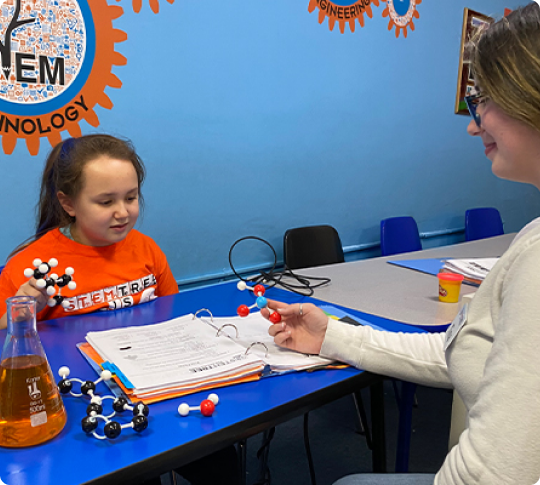
The environment at Stemtree in Spring is designed to sustain curiosity over time. There is a quiet confidence in the way tutors guide conversations. They listen for the precise moment when a student shifts from guessing to thinking. They know how to ask open ended questions that invite deeper explanation. They also recognize when to sidestep over correction that can erode a learner’s confidence. It is a delicate balance: fix the error, yes, but preserve the student’s sense of competence and agency. In practice, that means choosing the right prompt, offering a scaffold that can be gradually removed, and praising the student for the specific cognitive move they made. The subtlety matters. It turns a moment of confusion into a moment of insight and, more importantly, preserves the student’s willingness to engage with difficult tasks in the future.
The tutor’s toolbox is a carefully curated set of strategies rather than a single method. Some families are drawn to a one on one arrangement because it provides uninterrupted focus and a tailored pace. Others appreciate a small group setting where peers can model strategies, celebrate each other’s successes, and learn to negotiate different viewpoints during problem solving. Both configurations have their merits. In one on one sessions, there is room to push a student toward deeper mastery and to respond to their unique misconceptions in real time. In groups, students observe diverse thinking styles, hear robust questions from peers, and practice collaborative communication that is essential for modern STEM work. Stemtree in Spring remains flexible enough to accommodate both preferences without compromising the core aims of accuracy, coherence, and confidence.
A practical consideration for families evaluating tutoring centers is the alignment between core curricula and elective enrichment. Stemtree in Spring seems to recognize that academic success is not a race but a layered ascent. It isn’t enough to improve a few disconnected skills; the real payoff comes from integrating those skills into a consistent practice pattern that helps students advance through school with less friction. For instance, a student who learns to organize their notes, map out a problem solving plan, and articulate their reasoning clearly will outperform a student who can memorize procedures without understanding. The school year becomes less about surviving the next exam and more about building a durable approach to learning.
That depth does not exist in a vacuum. It is grounded in real world projects and experiences that give students a stake in their own education. Stemtree’s offerings in Spring frequently incorporate projects that resemble authentic tasks. A coding project may involve building a simple app that addresses a local need, a math project might model a small business scenario, and a science project could explore environmental data from nearby ecosystems. When students see a direct connection between their work and a tangible outcome, motivation grows and the learning becomes more durable. The sense that a student is building something meaningful in their community gives their study a narrative arc that textbook exercises rarely provide.
In terms of long term outlook, families frequently ask how tutoring and STEM programs in Spring influence college readiness. The answer is nuanced. There is not a one size fits all guarantee, but there is a clear trend: students who engage with a consistent, supportive learning environment tend to develop stronger study habits, higher levels of self efficacy, and a more robust portfolio of work across disciplines. The sorts of projects that emerge from Stemtree classes—coding portfolios, science fair experiments, analytic writing samples—provide practical artifacts that can be shared on college applications or scholarships, and more importantly, they demonstrate a student’s capacity to sustain effort, reflect on outcomes, and iterate toward improvement.
No discussion of tutoring and STEM programs would be complete without acknowledging the inevitable limits and trade offs. Some families want rapid test score improvements, and while Stemtree can deliver measurable progress, the timeline for true mastery is variable. Student engagement can wax and wane with life circumstances, such as changes in school schedules, family stress, or competing commitments. The best outcomes arise when families commit to a recurring schedule for a semester or longer, and when students volunteers their own curiosity in the process. There is also the reality that not every student will love every subject equally. The goal is not forced enthusiasm but a cultivated competence that makes any subject more approachable.
For families considering Stemtree in Spring, a simple, practical guide can help you make the most of the experience. First, start with a clear picture of goals. Do you want a student who can tackle algebra with confidence, or a learner who can explain their reasoning clearly in writing and talk through a science experiment aloud? Second, calibrate the pace. If a child is juggling multiple commitments, you may opt for a lighter but steadier cadence, with a regular weekly rhythm rather than sporadic bursts. Third, map progress not just to grades but to concrete capabilities. A student’s improvement should be visible in how they approach problems, how they communicate their thinking, and how they persist when faced with a challenge. Fourth, keep the door open for enrichment. Coding classes for kids and STEM camps Stemtree lego robotics spring tx of Spring TX provide avenues to practice in an integrated environment that complements regular coursework. Fifth, stay engaged. Tutors are partners, not mere service providers. Regular communication about your child’s progress, preferences, and concerns creates a loop that supports lasting growth.
The role of the educational ecosystem in Spring is to provide a constellation of resources around a family. Stemtree is one bright star in that constellation, offering a coherent blend of tutoring, enrichment, and hands on STEM experiences that align well with the needs of students at different stages. The value lies not in any single program but in the way the pieces fit together. When a student attends a tutoring session, participates in a coding class for kids, and then applies that learning to a science project, the margin of improvement expands beyond what each activity would yield on its own. The synergy is real because the underlying mental habits—attention to detail, iterative testing, clear articulation of reasoning—are reinforced across contexts.
A closer look at specific program areas helps illuminate how the Spring location differentiates itself. The tutoring center addresses foundational competencies—reading comprehension, writing, mathematics, and problem solving—through a personalized lens. Tutors track a student’s growth with notes that map back to observable behaviors: a student can articulate a solution, can explain why a method works, and can identify where a misstep lies. The approach is diagnostic and corrective rather than evaluative. It emphasizes process over product, though the product eventually serves as a compelling proof of progress. In the classroom style of Spring, the tutor acts as a guide who co constructs understanding with the student rather than a lecturer who delivers answers. This fosters autonomy, which is ultimately what parents desire: a learner who can navigate new topics with confidence, even when the Subject Matter shifts quickly.
Coding classes for kids deepen this bedrock of problem solving with a concrete, creative outlet. The pathway from block based programming to more sophisticated languages mirrors a student’s cognitive development. It begins with story driven tasks that teach sequencing and logic, moves through basic loops and conditionals, and culminates in projects that require planning, testing, and debugging. The emphasis on debugging is especially important. Students learn that errors are not failures but essential steps in the design process. Each bug becomes a puzzle that requires patience, curiosity, and a careful adjustment of strategy. The hands on nature of coding offers an accessible entry point for many students who might find traditional math or science instruction dry or intimidating. When you present a problem as a puzzle to solve rather than a chore to complete, motivation follows quickly.
STEM camps Stemtree of Spring TX also play a critical role, particularly during summer and school holidays when kids crave structure and novelty. Camps create a concentrated, immersive experience that accelerates skill development in a way that a typical after school session cannot. They strike a balance between guided instruction and open exploration, allowing students to dive into big ideas—robotics, renewable energy projects, or data science mini challenges—without the pressure of a grade. For many families, a summer stem camp is not convenience but an investment. It pays off in the form of heightened confidence, a sharper sense of how to plan and execute projects, and a clearer understanding of where their interests lie. The best camps in Spring emphasize collaboration as much as individual achievement, teaching students to share ideas, negotiate roles in team projects, and present their work to an audience with poise.
From a long view, the work done in Stemtree’s Spring programs helps students prepare for a future where cross disciplinary fluency is the norm. The modern workplace demands people who can code, reason with data, read and write with clarity, and collaborate across teams. The ability to switch between a precise mathematical mindset and an interpretive, narrative sense when explaining findings is invaluable. Stemtree’s approach nurtures those capabilities gradually, through steady practice, meaningful projects, and teachers who understand how to keep a student’s eye on the horizon even as they tackle today’s challenge.
If you are considering Stemtree for your child in Spring, TX, here are some practical questions to guide a conversations with staff and decide on a plan:
- How do you tailor tutoring plans to a student who is behind in math but excited about coding?
- What is the balance between one on one time and small group work in a typical week?
- Can you share a sample project from a recent coding class and a recent science or math project?
- How do you measure progress beyond grades, and how often do you communicate that progress to families?
- What opportunities exist for summer programs or weekend STEM camps to sustain momentum?
These questions are not a test of a center’s capabilities but a way to gauge whether the program will align with your child’s temperament and your family’s expectations. In Spring, as in many communities, the most successful arrangements are those that view education as a shared journey. Tutors and families collaborate to transform friction into curiosity, and to convert setbacks into stepping stones.
The human element remains at the heart of every promising tutoring experience. A good tutor is not simply a provider of correct answers but a partner who helps a student articulate their thinking clearly enough to reveal the next question. A strong coding instructor is not just a teacher of syntax but a mentor who helps a student see how a problem is structured, where assumptions matter, and why an elegant solution belongs to a well organized plan. A patient science mentor can turn a noisy data set into a narrative, guiding a student to ask better questions, design better experiments, and draw more faithful conclusions. When these elements come together in Spring’s Stemtree programs, the result is not just better test scores but a more capable, curious, and resilient learner.
In the end, a student’s success in Spring is not measured by a single metric, but by a composite of progress across subjects and disciplines. It is the ability to switch between a math problem and a coding challenge with ease, the willingness to revise a paragraph because the reasoning behind it was unclear, and the pride a student feels after seeing a science project come to life. It is the quiet confidence that grows when a learner realizes they can tackle unfamiliar tasks by breaking them into manageable parts and testing ideas with a patient, methodical approach. This is the essence of Stemtree in Spring TX: a place where tutoring, STEM camps, and coding classes for kids come together to illuminate a path forward for students who are ready to grow.
If you decide to explore Stemtree of Spring TX for tutoring, coding classes for kids, or a summer stem camp, you’ll find a team that treats your child as a developing thinker rather than a collection of scores. The aim is not to produce overnight transformations, but to cultivate a durable sense of competence that travels beyond the classroom. The most powerful outcomes arise when families and tutors share a steady rhythm, when projects connect to real life, and when a student wakes up each morning with a clearer idea of what they want to explore next. That is the kind of learning journey Stemtree in Spring makes possible, one thoughtful session at a time.
Two quick notes for readers who skim more than they study:
- The best program decisions come from observing where a student thrives. A child who lights up during a coding project may benefit from periodic participation in the STEM camps Stemtree of Spring TX offers, even if their end goal remains rooted in reading or math growth.
- Behavior changes often precede academic improvements. If you notice your child developing a habit of asking questions before rushing to a conclusion, you are watching the early signs of genuine intellectual growth fostered by a thoughtful tutoring environment.
If you are curious about how Stemtree can help your child in Spring, TX, consider visiting the center for a trial session or speaking with a program coordinator who can help tailor a plan that respects your family’s schedule and your child’s interests. The right fit shows up not in glossy marketing language but in the steady, tangible changes you observe in your child’s approach to learning, their confidence in problem solving, and their willingness to engage with challenges that used to feel intimidating.
In closing, the story of Stemtree in Spring TX is not about a single triumph. It is about a sustained, collaborative effort to turn stumbling blocks into ladders, to convert pauses into purposeful practice, and to invite students to own their learning journey. It is about building a community that sees education as a human enterprise filled with curiosity, creativity, and careful thought. And it is about the quiet, persistent belief that every student can find their voice as a thinker, a coder, a reader, and a problem solver when given the right kinds of support, time, and encouragement. Stemtree in Spring delivers that kind of support through tutoring, consistent practice, and enriching STEM experiences that leave a lasting imprint on a student’s academic life and future possibilities.